Porto short-term rentals licence information
Last updated: June 1, 2026
An Alojamento Local (short-term rental) licence is a legal requirement for any property owner who wants to host paying guests for stays of fewer than 30 days. Without it, you cannot list your property on the major booking platforms, and operating without a licence is a legal infringement subject to fines.
The regulatory framework has changed considerably since 2023. Decreto-Lei n.º 76/2024 reversed most of the restrictive measures introduced by the Mais Habitação package, returned to municipalities the autonomy to manage Alojamento Local through their own regulations, and introduced relevant changes to administrative deadlines, taxation, and licence transferability.
Porto currently operates under Regulamento Municipal n.º 495-A/2023, which defines, parish by parish, where new registrations are permitted.
This guide covers the three steps required to obtain your registration, the checks you should carry out before starting, and the obligations that remain in place once your licence number has been issued.
If you are not yet sure whether your property is in an area where registration is permitted, start with our article on the containment areas for Alojamento Local in Porto, which details the pressure ratios by parish and the conditions currently in force. For owners who prefer to delegate the operation from the outset, we provide airbnb management in Porto with local teams across every stage of the process.
TL;DR
- An Alojamento Local licence is required for any paid stay of fewer than 30 days.
- Porto divides its territory into sustainable growth areas and containment areas, based on pressure ratios by parish. Checking which zone your property falls into is the first step before making any application.
- The process has three stages: opening an activity with the Finanças (tax authority), registering at the Balcão Único Eletrónico (Single Electronic Desk), and meeting the safety requirements.
- After submission, the Câmara Municipal (city council) has 60 working days to raise an objection (90 in containment areas). If no objection is raised, the registration number is issued automatically.
- Decreto-Lei n.º 76/2024 reversed the main restrictions from Mais Habitação: licences are now issued with indefinite duration, the CEAL (extraordinary contribution on Alojamento Local) has been revoked, and transferability is permitted outside containment areas.
Before you start: is your property eligible for a short-term rental licence in Porto?
There are conditions that determine, before any formal application, whether a property is eligible for registration. Overlooking them can result in immediate rejection.
1. Usage licence
The property must have a valid usage licence (licença de utilização) for residential purposes, issued by the Câmara Municipal do Porto. This document confirms that the building or unit meets the legal habitability and safety requirements for receiving guests.
Properties built before 1951 are exempt from this requirement, but the owner must be able to demonstrate the building’s age with appropriate documentation. The absence of a valid usage licence is one of the most common grounds for rejection.
2. Condominium title deed
In buildings under horizontal property ownership, the constitutive title (título constitutivo do condomínio) may prohibit or restrict commercial activities, including Alojamento Local.
Under Decreto-Lei n.º 76/2024, prior approval from the residents’ assembly (assembleia de condóminos) is no longer required for most AL property types. It remains a requirement only for hostels.
For all other property types, residents may object to the activity after registration, by a reasoned resolution representing more than half the building’s permilagem (proportional ownership share). Checking the constitutive title before proceeding is a precaution that can avoid costly disputes once the registration is in place.
3. Containment zones
Porto divides its territory into sustainable growth areas, where the Alojamento Local pressure ratio relative to total permanent dwellings is below 15%, and containment areas (áreas de contenção), where that ratio equals or exceeds 15%.
In historic zones such as Vitória, São Nicolau, Sé, Santo Ildefonso, and Miragaia, the ratios are very high and new registrations are heavily restricted. Parishes such as Cedofeita, Bonfim, Foz do Douro, and Campanhã have low ratios and permit new registrations.
Check the updated ratios in our dedicated article on Porto’s Alojamento Local containment areas before starting the process.
Estimate your property’s potential
What is an Alojamento Local?
In Portugal, Alojamento Local refers to establishments that provide paid temporary accommodation and do not meet the requirements to be classified as tourist developments, a category that includes hotels, aparthotels, tourist villages, and resorts.
To be classified as Alojamento Local, an establishment cannot have more than nine rooms or accommodate more than 27 guests at the same time. The base occupancy is calculated by multiplying the number of rooms by two.
A further two guests may be accommodated in the living room, in apartments and villas that have one. Supplementary beds may be added up to 50% of the number of fixed beds.
The absolute limit of 27 guests applies regardless of the property’s configuration. Hostels and the rooms (quartos) property type are exceptions to this limit. Each building may have a maximum of nine Alojamento Local units, or up to 75% of its total residential units, allocated to this activity.
Property types
Moradia (villa)
- An independent residential property used in its entirety as an Alojamento Local.
Apartamento (apartment)
- A self-contained unit within a building, with independent use, allocated to Alojamento Local.
Estabelecimento de hospedagem (guest house)
- Accommodation units made up of rooms within a self-contained unit. May operate under the designation of hostel when the predominant unit is a shared dormitory, provided the specific legal requirements are met.
Quartos (rooms)
- Rental of individual rooms in the owner’s registered tax residence (residência fiscal), with a maximum of three rooms available. Where more than three rooms are offered, or where the property address does not match the owner’s registered tax address, the activity must be registered under the estabelecimento de hospedagem property type.
How to obtain a short-term rental licence in Porto
The registration process has three sequential stages. The first two can be completed entirely online.
Step 1: opening an activity with the Finanças
The first step is to register the accommodation services activity with the Autoridade Tributária (tax authority) via the Portal das Finanças. This registration must be completed before submitting the licence application and can be done online using a Cartão de Cidadão (citizen ID card) or Chave Móvel Digital (digital mobile key). Those without digital access can register in person at a Finanças counter.
To complete the registration, have the following to hand:
- Cartão de Cidadão or Chave Móvel Digital
- Número de Identificação Fiscal — NIF (tax identification number)
- Property address, if different from your registered tax address
- Estimated annual income
- Expected activity start date
On the form, select Categoria B as the type of taxable subject, and enter CAE code 55201 (alojamento mobilado para turistas — furnished lodging for tourists) or 55204 (outros locais de alojamento de curta duração — other short-duration accommodation). Also activate transmissões intracomunitárias (VIES) so that booking platform commission invoices are issued without VAT.
Regime Simplificado or Contabilidade Organizada?
The Regime Simplificado applies to property owners with annual turnover up to €200,000 and is the most common choice for individual Alojamento Local owners. It does not require a certified accountant (técnico oficial de contas), and the owner is responsible for their own accounting.
Contabilidade Organizada (organised accounts regime) is mandatory above that threshold. It requires a certified accountant, but may be advantageous for owners with high operating costs that justify more precise deductions. Any taxpayer may opt into this regime voluntarily.
Under the Regime Simplificado, tax is calculated on a percentage of gross income, determined by a coefficient that varies according to the property’s location:
- Outside containment areas: coefficient of 0.35. Tax applies to 35% of gross income; the remaining 65% is treated as presumed operating costs.
- In containment areas: coefficient of 0.50. Tax applies to 50% of gross income.
In both cases, the taxpayer must demonstrate at least 15% of gross income in actual expenses through the e-Fatura portal. Failure to do so increases the taxable base.
Step 2: registering at the Balcão Único Eletrónico
With the activity opened at the Finanças, the Alojamento Local registration application is submitted through the Balcão Único Eletrónico on the ePortugal portal. This is a prior notification with a deadline (comunicação prévia com prazo), addressed to the President of the Câmara Municipal do Porto.
Authentication on the portal requires a Cartão de Cidadão with a card reader, or a Chave Móvel Digital. Those without these means can use the in-person service at the Gabinete do Munícipe of the Câmara Municipal do Porto, by prior appointment, Monday to Friday between 9:00 and 12:00 and 14:30 and 16:30.
Required documents
- Usage licence (autorização de utilização) — not required for buildings built before 1951
- Caderneta predial urbana (urban property tax document) issued within the last six months
- Proof of activity registration with the Finanças under CAE 55201 or 55204
- Valid third-party civil liability insurance (seguro de responsabilidade civil extracontratual)
- Identification document of the licence holder
- Termo de responsabilidade (term of responsibility) signed by the licence holder
- Lease agreement or comodato (consent agreement), if the licence holder is not the property owner
- Comodato signed by all parties, in cases of co-ownership
- Minutes of the residents’ assembly (ata da assembleia de condóminos) with explicit authorisation, for hostels
The total size of all uploaded files cannot exceed 2 MB.
Deadlines and the council’s response
After submission, the Câmara Municipal do Porto has 60 working days to assess the application and, if applicable, raise an objection. For properties in containment areas, this deadline extends to 90 working days, as the assessment includes a check of territorial pressure ratios.
These deadlines are considerably longer than those in force before 2024 and should be factored into your plans for opening to guests.
If no objection is raised within the applicable deadline, the registration number is issued automatically. This number is the only valid title to open the property to guests and must appear in all advertising, commercial documentation, and listing platform profiles.
Grounds for rejection
Applications are most commonly rejected due to incorrect completion of the form, missing or out-of-date documents, a property located in a containment area where no applicable exception exists, or the absence of a usage licence.
In the event of rejection, the application can be resubmitted after correction. The platform may not specify which points led to the rejection.
Step 3: safety requirements and inspection
The property must meet the safety requirements from the first day of activity. It is important to distinguish two separate moments in this stage: if the Câmara Municipal does not object to the registration within the 60 working day deadline (or 90 days in containment areas), the registration number is issued by positive silence (silêncio positivo) and the owner may open the property to guests.
The verification inspection takes place within that same period or after the number has been issued, and the council may inspect the property at any point during that window. The ASAE (food and economic safety authority) and Turismo de Portugal may also inspect the property as part of independent enforcement actions. Being prepared before submitting the application avoids complications after opening.
General property conditions
- Connection to the public water supply and sewerage network, or a duly maintained private system
- Hot and cold running water in all bathrooms
- Openings with direct communication to the outside in all accommodation spaces, ensuring adequate ventilation and air circulation
- Furniture, equipment, and fittings in good condition and appropriate for the declared capacity
- Light-blocking system on bedroom windows
- Doors with a lock or equivalent system ensuring guest privacy
- Bathroom facilities with a closure system ensuring privacy
- Maintained conditions of hygiene and cleanliness throughout
Mandatory equipment and signage
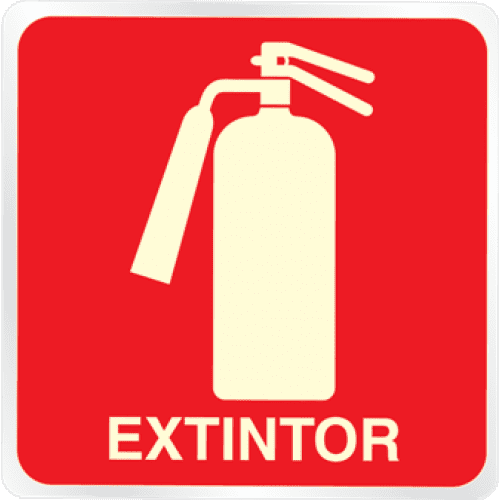
- ABC Chemical Powder fire extinguisher (6 kg) or Additive Water extinguisher (5 kg), with photoluminescent signage fixed at 2 metres height
- Fire blanket installed in the kitchen, at a distance from the hob no greater than one arm’s reach, with photoluminescent signage at 2 metres height
- First aid kit with the minimum contents defined by the Direcção-Geral de Saúde (Directorate-General for Health), marked with a white cross on a green background
- National emergency number (112) displayed in a visible location
- Physical and electronic complaints book (livro de reclamações), with a completed and displayed cover page
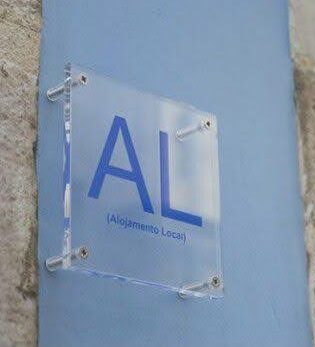
- AL identification plate next to the entrance — mandatory for apartments, rooms, and hostels
For units with a capacity of more than 10 guests, additional fire safety requirements apply under the SCIE (fire safety in buildings) regulations.
Identification plate
The plate must be in transparent crystal acrylic, measuring 200 mm × 200 mm with a thickness of 10 mm. The letters “AL” must appear in Arial 200 font, dark blue (Pantone 280). The plate is fixed next to the entrance at 50 mm from the wall, using stainless steel screws in each corner. Moradias (villas) are exempt from this requirement.
Information guide
All Alojamento Local properties must make an information guide available to guests in Portuguese, English, and at least two further foreign languages.
The guide must cover the rules for use of the property, waste separation, operation of household appliances, noise rules, and the contact details of the person responsible for the operation.
In buildings under horizontal property ownership, it must also include any condominium rules relevant to guests.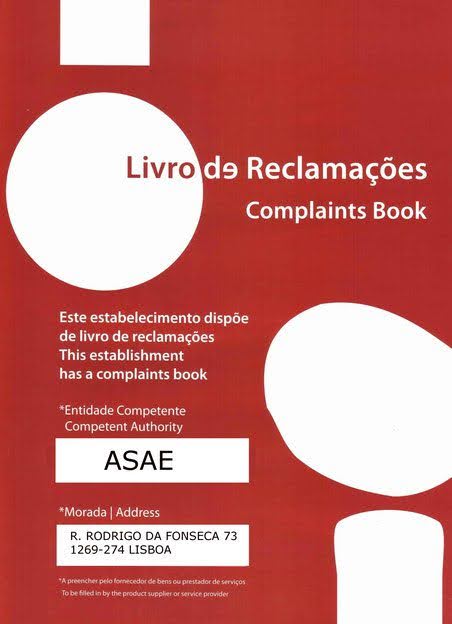
Mandatory insurance
A valid third-party civil liability insurance policy (seguro de responsabilidade civil extracontratual) must be maintained in the name of the licence holder, covering material and non-material damages caused to guests and third parties. Failure to provide valid proof of insurance can result in immediate cancellation of the registration.
Estimate your property’s potential
Operational obligations after registration
The registration number marks the start of the activity, not the end of your responsibilities. Failure to meet the obligations below can result in fines or cancellation of the registration.
1. Reporting guests to AIMA
Following the dissolution of the SEF (borders and immigration service) in October 2023, the reporting of foreign guests’ stays is now handled through the Sistema de Informação de Boletins de Alojamento (SIBA — accommodation bulletin information system), managed by the Agência para a Integração, Migrações e Asilo (AIMA). The access portal remains at siba.sef.pt for reasons of technical continuity.
Reports must be submitted within three working days of each foreign guest’s check-in. The initial SIBA registration can take up to 48 hours to activate, so it is worth completing this step as soon as the licence number has been issued. Failure to comply can result in fines of up to €3,750 per unreported guest.
2. Municipal tourist tax
Alojamento Local properties are required to collect the municipal tourist tax (taxa municipal turística) from guests and remit it to the municipality. In Porto, since 1 December 2024, the rate is €3.00 per night per person over the age of 13, up to a maximum of seven consecutive nights per stay. The Câmara Municipal began a review process in 2025 to increase this to €4.00 in 2026.
Exemptions apply to children under 13, people with a disability of 60% or above, and guests whose stay is motivated by a medical procedure, along with up to two accompanying persons.
Airbnb collects and remits this tax automatically under a protocol with the Câmara Municipal do Porto. On all other platforms, including Booking.com, and for direct bookings, the responsibility for collection and remittance lies with the owner, via the taxaturistica.cm-porto.pt portal.
Tourist tax in Vila Nova de Gaia
In Gaia, Airbnb does not have a partnership with the local council, so the owner is responsible for collecting and remitting the tax across all platforms. The current rate is €3.00 per night. Check the details and exemption conditions on the Câmara Municipal de Gaia website.
3. Tax obligations
The table below summarises the main taxes and charges applicable to Alojamento Local in Porto in 2026.
| Tax / charge | Regime | Rate / coefficient | Note |
|---|---|---|---|
| IRS (income tax — Regime Simplificado) | Categoria B — outside containment area | Coefficient 0.35 | Tax applies to 35% of gross income; 65% treated as presumed operating costs |
| IRS (income tax — Regime Simplificado) | Categoria B — in containment area | Coefficient 0.50 | Tax applies to 50% of gross income; 50% treated as presumed operating costs |
| IVA (VAT) | Exemption (Art. 53 CIVA) | 0% | Applicable up to €15,000 annual turnover |
| IVA (VAT) | Standard regime | 6% (reduced rate) | Applicable to accommodation services |
| IMI (municipal property tax) | Municipal rates | 0.3% to 0.45% | Age depreciation coefficient (coeficiente de vetustez) reverts to variable calculation following revocation of Mais Habitação by DL 76/2024 |
| CEAL | Extraordinary contribution | Revoked | Revoked with retroactive effect from 31 December 2023 by DL 57/2024 |
| Tourist tax (Porto) | Municipal | €3.00 per night | Per person over 13, max. 7 nights; increase to €4.00 under review for 2026 |
| Tourist tax (Gaia) | Municipal | €3.00 per night | Check exemption conditions and remittance deadlines on the Câmara Municipal de Gaia website |
The rates and regimes listed above are subject to legislative change. Always verify the current figures with the Autoridade Tributária, the Câmara Municipal do Porto, or a certified accountant before making decisions based on this information.
Under the Regime Simplificado, the regular tax obligations include:
- Issuing a receipt for each booking within five days of receiving payment or after check-in.
- Submitting the SAF-T file to the Autoridade Tributária by the 20th of each month, covering receipts issued in the previous month, where receipts are not issued directly through the Portal das Finanças.
- Submitting the periodic IVA (VAT) return, for those not covered by the Art. 53 CIVA exemption.
- Submitting Modelo 30 by the second month following the payment of commissions to non-resident entities such as Airbnb or Booking.com. Where the Modelo RFI-21 from those entities is not available, the owner must apply a 25% withholding tax.
For owners who prefer to delegate the operational and tax management, it is worth understanding what an Alojamento Local management service involves and how it can simplify day-to-day property ownership.
4. Energy performance certificate
In Porto’s sustainable growth areas, as part of new municipal inspections, properties may be required to hold an Energy Performance Certificate (Certificado Energético) with a rating of D or above in order to obtain or renew their registration.
This requirement forms part of the European Union’s environmental sustainability objectives and has particular impact on older buildings with poor thermal performance.
Owners acquiring properties rated E or F should consider whether thermal insulation or energy improvement works are needed before proceeding with a licence application. Consult the property’s Energy Performance Certificate via ADENE (the national energy agency) or request an assessment from a qualified expert.
Frequently asked questions
How long does it take to obtain a short-term rental licence in Porto?
- Opening an activity with the Finanças can be completed on the same day. After submitting the registration at the Balcão Único Eletrónico, the Câmara Municipal do Porto has 60 working days to object in unrestricted zones, and 90 working days in containment areas. If no objection is raised within the applicable deadline, the registration number is issued automatically.
Do I need a Portuguese tax number (NIF) to register an Alojamento Local in Porto?
- Yes. A NIF (Número de Identificação Fiscal) is required before you can open an activity with the Finanças, which is the mandatory first step in the AL registration process. Non-residents can obtain a NIF through a Portuguese lawyer or solicitor acting with power of attorney, without needing to be present in Portugal. Once you have your NIF, the Finanças registration and the Balcão Único Eletrónico application can both be completed remotely through a representative.
Can I complete the Alojamento Local registration remotely if I am based outside Portugal?
- The Balcão Único Eletrónico application requires authentication via Cartão de Cidadão with a card reader, or a Chave Móvel Digital. Foreign nationals who do not hold these can grant power of attorney to a Portuguese lawyer, solicitor, or notary to complete the registration on their behalf. The in-person alternative is to attend the Gabinete do Munícipe at the Câmara Municipal do Porto by prior appointment, Monday to Friday between 9:00 and 12:00 and 14:30 and 16:30.
If I buy a property in Porto that already has an AL licence, can I continue operating it?
- In most cases, yes. Porto does not apply Lisbon’s automatic licence-expiry-on-sale rule. Under Decreto-Lei n.º 76/2024, AL registrations are transferable with the property outside containment areas. In Porto’s containment zones, transferability is subject to the municipal regulation in force. Before exchanging contracts on any Porto property with an active AL registration, confirm the parish’s containment status and verify the registration’s current standing on the national RNAL database.
What tax will I pay as a non-resident operating an Alojamento Local in Porto?
- Under the Regime Simplificado, non-residents pay a flat 25% IRS rate on the taxable portion of gross income. For a standard apartment or villa outside a containment area, the taxable coefficient is 0.35, producing an effective rate of approximately 8.75% on gross income. In a containment area, the coefficient rises to 0.50, giving an effective rate of around 12.5%.
- From 1 July 2025, non-residents also lost eligibility for the small-business VAT exemption and must now charge 6% IVA on stays and appoint a fiscal representative in Portugal. The UK–Portugal double taxation treaty prevents the same income being taxed twice. Speak to a certified accountant or tax specialist before making investment decisions based on these figures.
What does EU Regulation 2024/1028 mean for my Porto AL property?
- From 20 May 2026, platforms including Airbnb and Booking.com are required to verify all AL registration numbers, display them publicly, and automatically remove listings where the number is invalid or fraudulent. Monthly rental activity data will also be reported to Portuguese authorities. If you already hold a valid RNAL number, no re-registration is needed. The practical step is to ensure that the address, property type, and capacity on your RNAL record exactly match what your listing platforms hold, as any mismatch will be flagged automatically.
Can I register an Alojamento Local in a rented property in Porto?
- Yes, provided the lease agreement explicitly authorises the provision of temporary accommodation services. If that authorisation is not included in the contract, a separate document from the property owner is required. Both must be submitted at the Balcão Único Eletrónico as part of the application.
Is the Alojamento Local licence transferable if I sell the property?
- Decreto-Lei n.º 76/2024 permits the transfer of the registration with the sale of the property in non-containment zones. In containment areas, transferability is subject to the rules of the municipal regulation in force. For full details by parish, see our article on Porto’s Alojamento Local containment areas.
What safety equipment is mandatory in an Alojamento Local in Porto?
- All AL establishments must have a fire extinguisher with appropriate signage, a fire blanket next to the hob, a first aid kit, a physical and electronic complaints book, an information guide in at least four languages, and the national emergency number 112 displayed in a visible location. Apartments, rooms, and hostels must display the AL identification plate at the entrance. For units accommodating more than 10 guests, additional SCIE requirements apply.
How can GuestReady help me with Alojamento Local in Porto?
- GuestReady handles the full operation of Alojamento Local in Porto: listing optimisation, professional photography, 24/7 guest management, hotel-standard cleaning, coordinated maintenance, and compliance with operational and tax obligations. Each owner has access to a dashboard with real-time revenue and occupancy data. To find out more, visit our airbnb management in Porto page.
Reference legislation
- Decreto-Lei n.º 76/2024, of 23 October — Reverses Mais Habitação measures and returns regulatory autonomy to municipalities in matters of Alojamento Local.
- Decreto-Lei n.º 57/2024 — Revokes the Contribuição Extraordinária sobre o Alojamento Local (CEAL) with retroactive effect from 31 December 2023.
- Regulamento Municipal n.º 495-A/2023 — Porto’s Municipal Regulation for the Sustainable Growth of Alojamento Local, in force since May 2023.
- Lei n.º 56/2023, of 6 October (Mais Habitação) — Partially revoked by DL 76/2024.
- Lei n.º 62/2018, of 22 August — Second amendment to Decreto-Lei n.º 128/2014.
- Decreto-Lei n.º 128/2014, of 29 August — Legal framework governing the operation of Alojamento Local establishments.
This guide is intended to assist property owners through the process of obtaining an Alojamento Local licence in Porto. Full legal compliance after registration, as well as situations specific to individual properties or licence holders, requires specialist legal or accounting advice.
Professional Alojamento Local management in Porto
GuestReady operates in Porto with local teams dedicated to the full property management of Alojamentos Locais. From listing optimisation and 24/7 guest management to hotel-standard cleaning and maintenance coordination, every element is handled in-house. Owners track their property’s performance in real time through a dedicated owner dashboard.
With over 2,000 properties managed across Portugal and internationally, the Porto team knows the local market and regulations from the inside. To find out more about how we work or to get a revenue estimate for your property, see our guide to the best Alojamento Local management companies in Porto or complete the form below.