Lisbon short-term rentals licence information
Last updated: May 6, 2026
Before you can legally rent your property to short-term guests in Lisbon, you need an Alojamento Local (AL) licence. The process has become more complex since 2024: processing times are longer, a new municipal regulation (RMAL) has been in force since December 2025, and parts of the city now restrict or prohibit new registrations entirely.
This guide covers the full process: from checking whether your property is eligible for registration, to opening your tax activity with the Finanças and submitting your application via the Balcão Único Eletrónico, through to the operational and fiscal obligations that apply once you have your registration number.
From May 2026, EU Regulation 2024/1028 adds a further layer of compliance. The regulation requires platforms such as Airbnb and Booking.com to verify registration numbers and automatically delist properties that lack valid licensing. Monthly data-sharing with local authorities is also mandatory under the new framework. Operating without a licence is no longer just a local enforcement risk.
If you have not yet checked whether your property falls within a containment area, that should be your first step. Lisbon’s ratio-based system restricts or prohibits new registrations in significant parts of the city, and eligibility varies by parish and neighbourhood.
GuestReady operates in Lisbon with local teams that follow regulatory developments in the city on a daily basis. If you are considering professional Airbnb management in Lisbon, our team handles the full operation from listing to guest checkout.
TL;DR
- You need an Alojamento Local (AL) licence to legally rent your property short-term in Lisbon
- Before applying, check whether your property is in a containment area: new registrations are restricted or prohibited across much of the city centre
- The process has three steps: open your tax activity with the Finanças, submit your registration via the Balcão Único Eletrónico, and pass a property safety inspection
- The CML has 60 business days to process your application, or 90 if your property is in a containment area
- Once registered, you have ongoing obligations: guest reporting to AIMA via SIBA, municipal tourist tax collection, and fiscal compliance
- From May 2026, unlicensed properties are subject to automatic delisting on platforms such as Airbnb and Booking.com under EU Regulation 2024/1028
The process at a glance
| Step | What you do | Where | Timeframe |
|---|---|---|---|
| 1. Open tax activity | Register as an accommodation service provider | Portal das Finanças | Same day |
| 2. Submit registration | File your registration application (comunicação prévia com prazo) | Balcão Único Eletrónico | 60 business days for CML review (90 in containment areas) |
| 3. Pass inspection | Ensure property meets all safety and equipment requirements | CML / ASAE visit | Within 30 days of submission |
This guide reflects Portugal’s short-term rental legislation and the Lisbon RMAL as in force at time of publication. Regulation in this area changes frequently: verify current requirements with the Câmara Municipal de Lisboa or a qualified legal adviser before proceeding, and consult a certified accountant for tax guidance specific to your situation.
Before you start: can your property be registered as an AL?
Before beginning any administrative process, three checks determine whether a property is eligible for registration at all. Skipping them risks a rejection and wasted time.
1. Authorisation of use (Autorização de utilização)
The property must hold a valid authorisation of use for residential purposes, issued by the Lisbon City Council (Câmara Municipal de Lisboa, or CML). This document certifies that the property meets the legal requirements for habitability, sanitation, and fire safety.
For properties built before 1951, an exemption from this requirement exists, but the owner must be able to provide documentary proof of the building’s age. In all cases, the property must meet effective habitability standards.
The authorisation of use can be requested at the CML’s Gabinete do Munícipe, at Rua Nova do Almada, n.º 2, 3rd floor.
2. Condominium rules
In buildings under horizontal property regime, the constitutive title may contain clauses restricting or prohibiting short-term rental activity. The Supreme Court of Justice has consolidated case law allowing residents to oppose an AL registration where the constitutive title specifies exclusively residential use.
Decree-Law 76/2024 rebalanced this relationship compared to the previous regime: the final decision on cancelling a registration now rests with the President of the City Council, who may promote mediation between the parties before deciding. Even so, checking the constitutive title and the condominium assembly records before proceeding avoids costly disputes.
3. Containment areas (Áreas de contenção)
Lisbon has operated since December 2025 under a ratio-based containment system, monitored monthly at parish and neighbourhood level.
In zones of absolute containment (ratio ≥10%), new registrations are prohibited except in urban rehabilitation cases.
In zones of relative containment (ratio ≥5% and <10%), registrations require express authorisation from the CML.
For anyone considering investing in Lisbon‘s short-term rental market, checking the current ratio for the parish and neighbourhood where the property is located is a mandatory step before beginning the registration process.
For full detail on ratios, classifications, and exceptions, see our article on AL containment areas in Lisbon.
Estimate your property’s potential
How to get an Alojamento Local licence in Lisbon
The process is divided into three steps, all of which can be completed online.
Step 1: Opening your tax activity with the Finanças
Before registering your Alojamento Local, you must open a tax activity as an accommodation service provider with the Portuguese Tax Authority (Autoridade Tributária), known as the Finanças. This is done through the Portal das Finanças and can be completed online in a matter of minutes, provided you have the necessary documents to hand.
You will need:
- Cartão de Cidadão (Portuguese ID card) or Chave Móvel Digital (Digital Mobile Key)
- Número de Identificação Fiscal (NIF) — your Portuguese tax identification number
- The address of the property you intend to register as an AL
- An estimate of your expected annual income
- Your anticipated start date for the activity
In the activity registration form, select Category B (business income, or rendimentos empresariais) and enter CAE code 55201 (furnished tourist accommodation) or 55204 (other short-stay accommodation). You should also activate intra-community transactions (VIES), which means invoices for commissions from booking platforms will be issued without VAT.
Do I need a NIF to register?
Yes. A Número de Identificação Fiscal (NIF) is required before you can carry out any official activity in Portugal, including registering an AL. Portuguese residents obtain a NIF through the Finanças directly. Non-residents can apply for a NIF from abroad through a Portuguese lawyer or solicitor acting on their behalf. This should be the first step for any foreign owner who does not yet have one.
Simplified regime or organised accounting?
The simplified regime (regime simplificado) applies to anyone billing up to €200,000 annually and is the most common choice for individual property owners. You manage your own accounting without requiring a certified accountant.
Organised accounting (contabilidade organizada) is mandatory above that threshold, though any taxpayer may opt into it voluntarily. It requires engaging a Contabilista Certificado but may be advantageous for owners with significant operational expenses.
The choice of tax regime has a direct impact on how your income is taxed. We cover the applicable coefficients and fiscal obligations in the post-registration section below.
Tax laws in Portugal change frequently. The information in this guide is provided for general orientation only. Consult a Contabilista Certificado (certified Portuguese accountant) for advice specific to your situation.
Step 2: Registering your AL at the Balcão Único Eletrónico
Once your tax activity is open, the next step is to submit a prior communication with deadline (comunicação prévia com prazo) through the Balcão Único Eletrónico, accessible via the ePortugal portal. This is the formal registration request for your Alojamento Local, addressed to the President of the City Council.
Authentication requires a Cartão de Cidadão with a card reader, or a Chave Móvel Digital. If you do not have either, you can complete the process in person at the Gabinete do Munícipe (Rua Nova do Almada, n.º 2, 3rd floor), Monday to Friday between 9am and 7pm.
Documents required
- Authorisation of use or valid property usage title (autorização de utilização)
- Urban property tax document (caderneta predial urbana), issued within the last six months
- Updated property registration certificate (certidão do registo predial)
- Floor plan of the property indicating room areas and intended capacity
- Third-party civil liability insurance (seguro de responsabilidade civil extracontratual)
- Fire insurance (mandatory in buildings under horizontal property regime)
- Copy of the identification document of the person responsible for the AL
- Declaration of activity opening from the Finanças (CAE 55201 or 55204)
- Term of responsibility signed by the titleholder (termo de responsabilidade)
- Lease or loan-for-use agreement, if the titleholder is not the property owner
- Condominium assembly records (mandatory for hostels, recommended for all other property types)
If the property has multiple owners, a loan-for-use agreement (comodato) signed by all parties must be submitted.
Processing times: what to expect
The timelines have changed considerably under the RMAL. The CML now has 60 business days to review the application and raise an objection. In containment areas, this extends to 90 business days, as the review includes verification of the territorial ratios for the zone.
If the application is not rejected within this period, the registration number is issued. This number is the only valid title for opening the property to guests and must appear in all advertising, commercial documentation, and booking platform listings.
What can lead to a rejection?
Three main reasons: an incorrectly filed application (missing or invalid documentation), a breach of the containment rules applicable to the zone, or an inadequate authorisation of use. If the application is rejected, it can be resubmitted after correcting the points that led to the refusal.
Step 3: Safety requirements and inspection
After the registration is submitted, the CML has 30 days to carry out an inspection of the property. The ASAE (Food and Economic Safety Authority) and Turismo de Portugal may also inspect the premises as part of enforcement activity.
To avoid a rejection at this stage, the property should be fully prepared before the application is submitted.
General property requirements
- Connection to the public water and sewage network, or an approved private system
- Hot and cold running water
- Window or balcony with direct access to the outside
- Furniture, equipment, and utensils appropriate to the declared capacity
- Light-blocking system in all bedrooms
- Doors with a security system that ensures the privacy of guests
Mandatory signage and equipment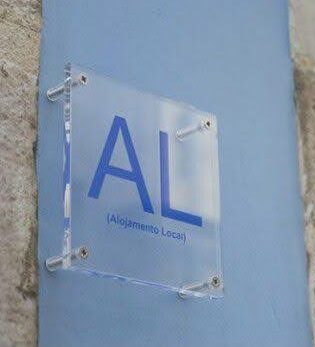
- AL identification plate at the entrance (mandatory for apartments, rooms, and hostels; villas are exempt)
- Fire extinguisher appropriate to the fire type (ABC Chemical Powder 6kg or Additive Water 5kg)
- Fire blanket next to the hob, within arm’s reach
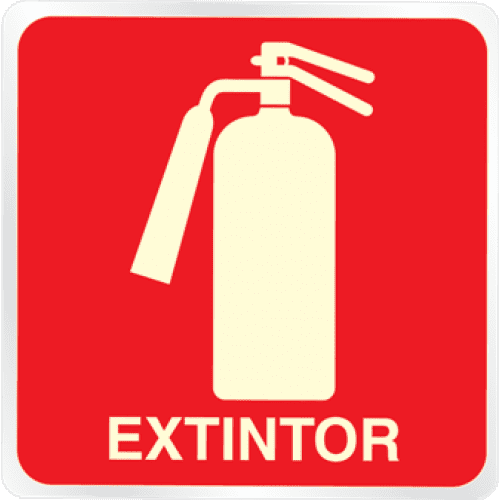
- Photoluminescent signage for the extinguisher and blanket, placed at 2 metres height
- National emergency number (112) displayed in a visible location
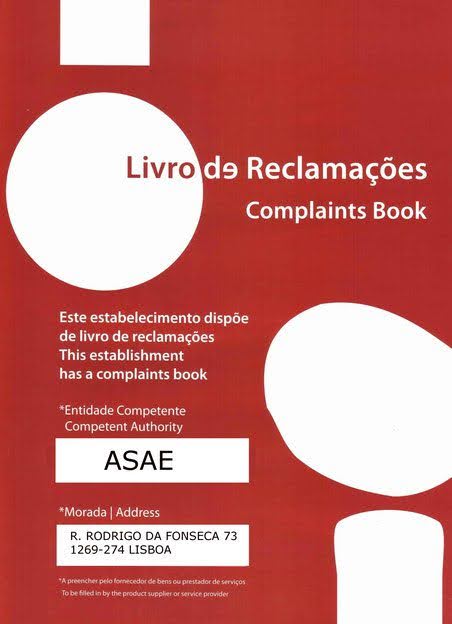
- Physical and electronic complaints book (livro de reclamações), with a completed and displayed cover page
- First aid kit with minimum contents as defined by the Directorate-General of Health (Direção-Geral de Saúde)

- Noise notices displaying the restricted hours under the General Noise Regulation (no noise between 8pm and 8am, or at weekends)
For units with a capacity of more than 10 guests, additional fire safety measures apply under the building fire safety regulations (SCIE).
Guest information booklet
All AL establishments must provide a guest information booklet in Portuguese, English, and at least two other languages.
The booklet must include the rules for use of the property, waste collection procedures, appliance instructions, noise rules, and the contact details of the person responsible for the AL. In buildings under horizontal property regime, it must also include the condominium rules relevant to guests.
Mandatory insurance
Two insurance policies are required to maintain a valid registration.
Third-party civil liability insurance is mandatory for all property types and covers material and non-material damages caused to guests and third parties.
In buildings under horizontal property regime, fire insurance is also required, covering damages caused in the unit or originating from it.
The absence of proof of either insurance was the leading cause of licence cancellations in the February 2026 CML enforcement action, in which 6,765 inactive or irregular registrations were cancelled.
Estimate your property’s potential
Operational obligations after registration
Obtaining your registration number is the beginning, not the end, of your responsibilities as an AL operator. Enforcement in Lisbon has intensified in 2026, and failure to meet any of the following obligations can result in fines or cancellation of your registration.
1. Guest reporting to AIMA
The Serviço de Estrangeiros e Fronteiras (SEF) was abolished in 2023. Guest reporting is now handled through the Sistema de Informação de Boletins de Alojamento (SIBA), under the coordination of the Agência para a Integração, Migrações e Asilo (AIMA).
The deadline remains the same: within three business days of check-in. For each reservation, you must collect and report the identification details of all guests. SIBA registration can take up to 48 hours to activate, so this step is best handled immediately after your licence is issued.
2. Municipal tourist tax (Taxa Municipal Turística)
The municipal tourist tax in Lisbon is €4 per night per guest aged over 13, up to a maximum of seven consecutive nights. From the eighth night onwards, the tax no longer applies.
Airbnb collects and remits the tax automatically under a protocol with the CML. For all other platforms, including Booking.com, Vrbo, and direct bookings, collection and payment are the owner’s responsibility, submitted via the CML portal by the 15th of the following month.
3. Fiscal obligations
Under the simplified regime, taxable income for IRS purposes is calculated using a coefficient that varies depending on the property’s location:
- Outside containment areas: a coefficient of 0.35 applies. You are taxed on 35% of your income, with 65% treated as a presumed expense allowance.
- Within containment areas: a coefficient of 0.50 applies. Taxation applies to 50% of income, reducing the presumed expense allowance to 50%.
In both cases, you must be able to evidence at least 15% of gross income in actual expenses (water, electricity, cleaning, management) through invoices recorded in the e-Fatura system. Failure to do so results in an increased tax base.
Ongoing fiscal obligations include issuing receipts within five days of payment or check-in, submitting the SAF-T file to the Tax Authority by the 20th of each month, and filing periodic VAT returns if not exempt.
VAT (IVA): a note for non-residents
AL activity is subject to VAT at the reduced rate of 6%. Portuguese residents billing under €15,000 annually may benefit from the exemption set out in Article 53 of the CIVA, with liability becoming immediate if this threshold is exceeded by more than 25% during the year.
Non-residents should be aware that the Article 53 exemption is generally not available to them. Under tax reforms effective from July 2025, non-resident AL operators are typically required to register for VAT and apply the 6% rate from the first euro of revenue, regardless of annual billing volume. The threshold rules described above for residents are unlikely to apply in your case.
Tax rules for non-residents operating an Alojamento Local in Portugal differ materially from those applying to residents. The information above is provided for general orientation only and reflects the framework as understood at time of publication. Consult a Contabilista Certificado (certified Portuguese accountant) for advice specific to your residency status and situation.
Frequently asked questions
How long does it take to get an Alojamento Local licence in Lisbon?
- The timeline depends on two factors: how quickly you can prepare the documentation, and the CML’s review period. Opening your tax activity with the Finanças can be done on the same day. Once the registration is submitted via the Balcão Único Eletrónico, the CML has 60 business days to raise an objection, or 90 business days if the property is in a containment area. If no objection is raised within that period, the registration number is issued.
What is the process for getting an Alojamento Local licence in Lisbon?
The process involves three steps, all completable online.
- First, open your tax activity with the Finanças using your NIF and selecting CAE code 55201 or 55204.
- Second, submit your registration via the Balcão Único Eletrónico, addressed to the President of the City Council, with the required documentation.
- Third, ensure the property meets all safety and equipment requirements before the CML inspection, which takes place within 30 days of submission.
Once approved, your AL registration number is issued and must appear on all listings and promotional materials.
Can I register an AL in a rented property?
- Yes, provided the lease agreement expressly authorises the provision of short-term accommodation services. If it does not, you will need a separate written authorisation from the property owner. Both the lease and the authorisation must be submitted as part of your application via the Balcão Único Eletrónico.
What does it cost to register an Alojamento Local in Lisbon?
- Registration itself is free of charge. The associated costs are indirect: third-party civil liability insurance, fire insurance (in buildings under horizontal property regime), mandatory safety equipment (fire extinguisher, fire blanket, photoluminescent signage, AL identification plate), and, once operational, the municipal tourist tax of €4 per guest night.
Is an AL licence transferable if I sell the property?
- It depends on the property’s location. Outside containment areas, the transfer of a registration is permitted. Within Lisbon’s absolute and relative containment areas, the sale of the property results in the automatic lapse of the registration for apartments and villas.
Do I need a Portuguese tax number (NIF) to register an Alojamento Local?
- Yes. A Número de Identificação Fiscal (NIF) is a prerequisite for any official activity in Portugal, including AL registration. If you are a non-resident and do not yet have one, you can apply through a Portuguese lawyer or solicitor authorised to act on your behalf. Allow sufficient time for this step before beginning the registration process.
I don’t have an Alojamento Local licence. Can I still rent my property?
- No. Operating a short-term rental without a valid AL registration is illegal in Portugal. Without a registration number, you cannot legally list your property on platforms such as Airbnb or Booking.com.
- From May 2026, EU Regulation 2024/1028 requires platforms to verify registration numbers and automatically delist unlicensed properties. Beyond platform delisting, operating without a licence exposes you to fines from the ASAE and the CML.
How has the Alojamento Local regulatory framework changed since 2024?
- Portugal’s short-term rental framework changed substantially in late 2024, when Decree-Law 76/2024 revoked most Mais Habitação restrictions and returned regulatory authority to municipalities. Lisbon responded with the RMAL in December 2025, introducing a ratio-based containment system that restricts new registrations across much of the city centre. Processing times have increased to 60 business days, or 90 in containment areas.
- From May 2026, EU Regulation 2024/1028 also requires platforms to verify and delist unlicensed properties across the EU.
Reference legislation
- Decree-Law 76/2024, of 23 October — Amends the legal framework governing Alojamento Local establishments and revokes housing measures introduced under Mais Habitação.
- Law 62/2018, of 22 August — Second amendment and republication of Decree-Law 128/2014.
- Decree-Law 63/2015, of 23 April — First amendment to Decree-Law 128/2014.
- Decree-Law 128/2014, of 29 August — Establishes the legal framework for Alojamento Local establishments.
- EU Regulation 2024/1028 — Harmonises short-term rental rules across the EU, mandating platform-level registration verification and monthly data-sharing with authorities.
This guide is intended to help and orient property owners through the Alojamento Local registration process. Ongoing compliance obligations after obtaining a licence are beyond the scope of this guide.
Professional Airbnb management in Lisbon
GuestReady manages properties in Lisbon with local teams dedicated to every stage of the operation: from listing optimisation and professional photography to 24/7 guest management, hotel-standard cleaning, and coordinated maintenance between stays. Each owner has access to a real-time dashboard with revenue, occupancy, and performance data.
With over 2,000 properties managed across Portugal, our Lisbon team knows the market from the inside and monitors the regulatory developments that affect owners in the city. Want to know what your property could earn? Find out more about our Airbnb management in Lisbon, or complete the form below and our team will be in touch.